‘Anthropomorphism – the attribution of human traits, feelings, and behaviours to inanimate objects, nonhuman animals, or nature’.
Anthropomorphism can occur consciously or unconsciously and is a common way people perceive the world. However, not only is it often misguided, the consequences can also be downright dangerous when we apply human characteristics to animals.
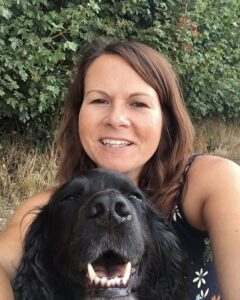
Take for example when people (especially children) believe that this picture shows a friendly dog ‘smiling’ at them, shortly before they get bitten!
We humans tend to assume that animals, particularly our beloved pets, feel the same emotions as us, which can lead to upsetting and confusing situations for the animal. For example, thinking that animals feel shame, the classic “he knows he’s done wrong” when arriving home to find your sofa destroyed and your dog with its tail between its legs and a cowered stance. The so-called “guilty look” is often a learned response to a human’s reaction, not a recognition of wrongdoing. The dog may associate a particular body language or tone of voice with a negative outcome, and react with appeasement behaviours, even if they haven’t actually done anything wrong (or aren’t aware that we perceive what they’ve done as wrong!)
It’s been shown in studies of people reading human emotions, that the same facial expression was perceived differently based on context, e.g. the exact same expression was perceived as ‘disgust’ when the picture showed the person holding a nappy, but as ‘sadness’ when they were shown beside a grave. And if someone has been exposed to a fearful image, e.g. a spider, they shortly afterwards perceive neutral faces as fearful. If we can’t be assured of accuracy within our own species, then it’s likely that our perceptions of animal’s emotional expressions could be inaccurate too.
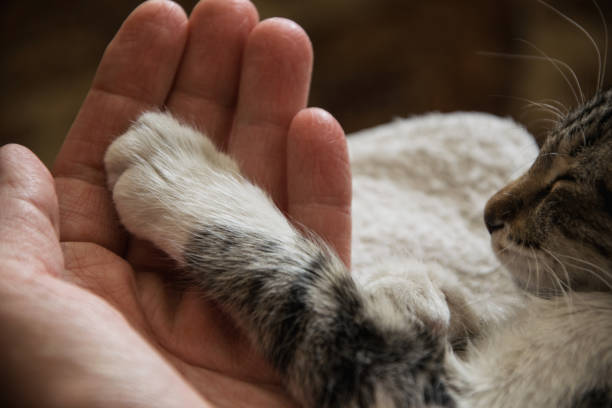
It’s not just dogs but cats too whose actions are often interpreted with an anthropomorphic view, ie. giving them human intentions and emotions. For example, when describing a cat that toilets outside the litter tray, adjectives such as dirty, stubborn, messy, and disobedient are commonly used. This gives the idea that the cat has poor hygiene and prefers using another area instead of the correct place even though it ‘knows this is wrong’. In the majority of cases, these are not the reasons for house-soiling in cats. There can be many causes, including pain, discomfort, blocked access to litter boxes, or lack of large, clean, appropriately placed litter boxes.
And when talking about a cat that has bitten someone, people tend to use words such as nasty and evil, as if the cat’s behaviour was purposeful and without reason other than it’s the cat’s nature. In reality, cats that bite are often using this as a defensive behaviour when there is no escape route, and/or are likely to be feeling extreme emotions such as fear, anxiety, frustration, or even pain.
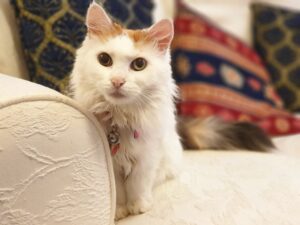
Cat’s faces are notoriously hard to read – they have fewer facial muscles with which to create expressions, leading people to interpret them as ‘aloof’ or ‘standoffish’. They actually tell us plenty with the position of their ears and whiskers, pupil size, tail movement etc, but it can take a while to learn to ‘talk cat’ and to be aware of the subtlest of changes, and many of us have received many a bite or scratch while we’re on that learning curve!
This is not to say that people can’t correctly interpret their pet’s expressions and body language, just that we need to be careful to not assume they feel the same way that we do in similar situations. Our interpretations are influenced by extraneous factors such as the context in which the animal is seen and/or the presence of other stimuli. The worry is that these errors could cause us to overlook or misinterpret an animal’s actual needs, leading to misunderstandings, and potential health issues being overlooked.
It’s worse though to assume that animals don’t possess emotions and feelings, as people used to believe a long time ago, and probably some still do. It was not until the Enlightenment of the 18th century that philosophers started to accept the notion that animals have feelings and emotions, although there is evidence that lay people knew long before this! Given that sentience in animals is now common knowledge, you have to wonder at how they are still sometimes treated so badly…
I believe that rather than trying to humanise animals, we should rejoice in our differences, celebrate when we communicate effectively across species (because wow, what an achievement!) and take wonder in all the animals with which we share the planet, along with their hidden depths and mysteries!






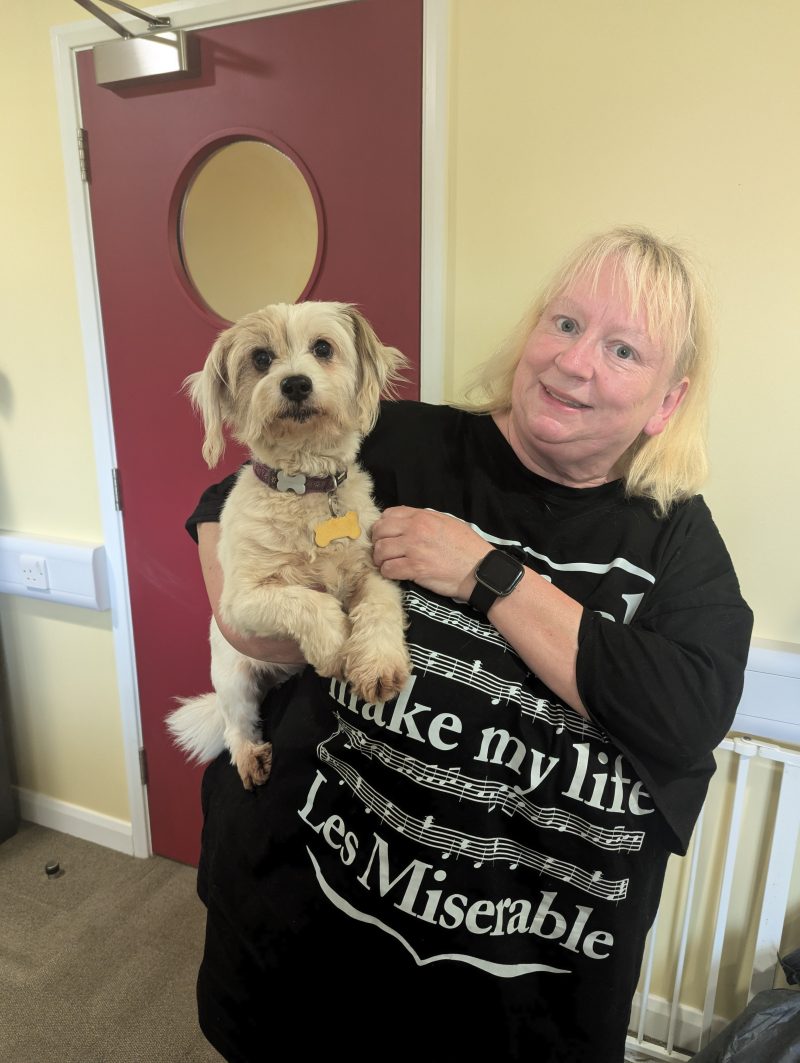
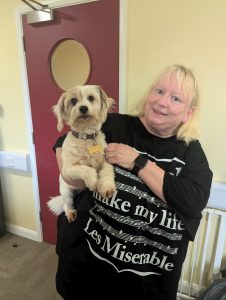







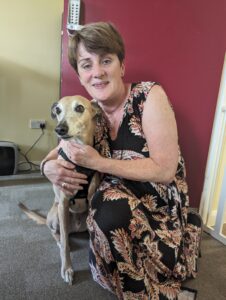
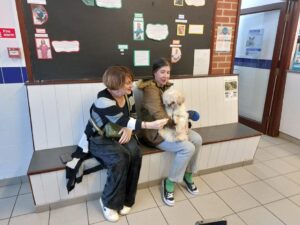


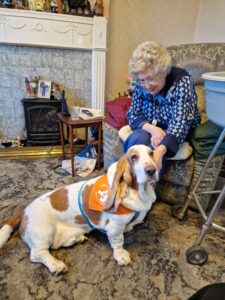



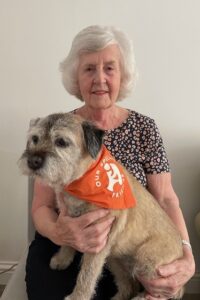
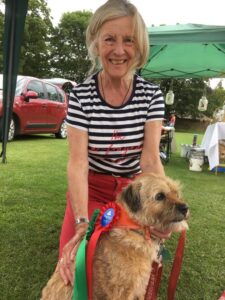 I then acquired two dogs, Meg, a border terrier, and Ben, a collie X Lab, who had both been abandoned strays. Our first client was a 90-year old lady in poor physical health who very much enjoyed our visits, when I took both dogs on alternate weeks. The dogs loved their new lives as visiting dogs. Even when the lady suffered memory loss and did not remember my name, she always remembered Meg’s. I took Meg to her funeral, which was very sad, as the only other attendees were her son and a carer.
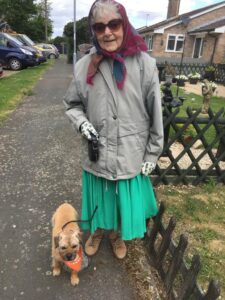 These days I assist the charity, when time permits, as I now look after a wide range of pets: dogs, cats, llamas, horses and even a lizard, when their owners across Suffolk are away. I continue to attend various events to help promote OSF, as I have done over the years, and I am hoping to resume visiting clients with my dog, when I have welcomed my next rescue dog and she is suitably trained.”
 I’ve had a long and rewarding career, initially ten years in wealth management in New York, then ten years in retail in London, and 20 years running my own coaching business, teaching management skills. Wherever I’ve been based, I’ve made time for voluntary work. In London I helped a charity working for disadvantaged and orphaned children, some in the notorious Romanian orphanages. Of particular relevance to my OSF role was supporting a pet charity in rural France where I had retired in 2008, Les Amis des Chats. Like OSF, it was started by a vet who saw a need. Local villages were overrun with sick and feral cats. LADC paid a contribution to farmers and villagers to get cats sprayed and vaccinated. My job was to distribute the funds and co-ordinate with a network of local vets who carried out the work.
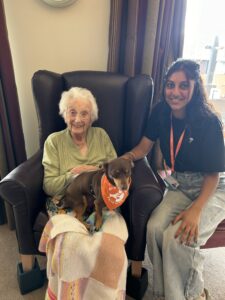 We decided on an hour walking a dog for Sam, who was unable to exercise her pet, and the other taking Coco to visit Joyce, a lonely, housebound elderly lady. Both live in Haverhill so I didn’t need to travel far.


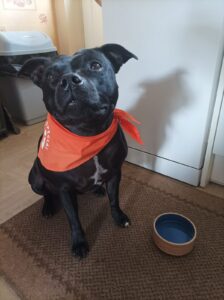


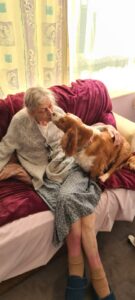
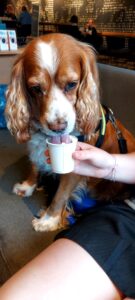 In less than a week, Enid was back in hospital and Honey needed fostering again. Thankfully, Rebecca was available to look after the dog again. This time it was nine days before Enid and Honey could be reunited. During this time, Honey ventured into town and experienced her first ‘puppicino’ (left). She also provided much comfort to Rebecca’s teenage daughter.





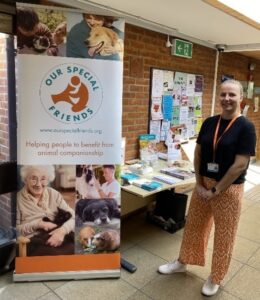 After 12 years of teaching in primary schools, I was ready for a change in career. As much as I loved teaching and inspiring the next generation, I was fed up and exhausted with the ever-increasing paperwork and politics involved in education. I knew I needed to make a change to improve my own wellbeing and when I saw the job as an Animal Companionship Coordinator at Our Special Friends (OSF) it felt like the job description was written for me; it was literally my dream job! Helping people and helping animals.